And as I was green and carefree, famous among the barnsDylan Thomas (1914-1953), Fern Hill
About the happy yard and singing as the farm was home,
In the sun that is young once only,
Time let me play and be
Golden in the mercy of his means,
And green and golden I was huntsman and herdsman, the calves
Sang to my horn, the foxes on the hills barked clear and cold,
And the sabbath rang slowly
In the pebbles of the holy streams.
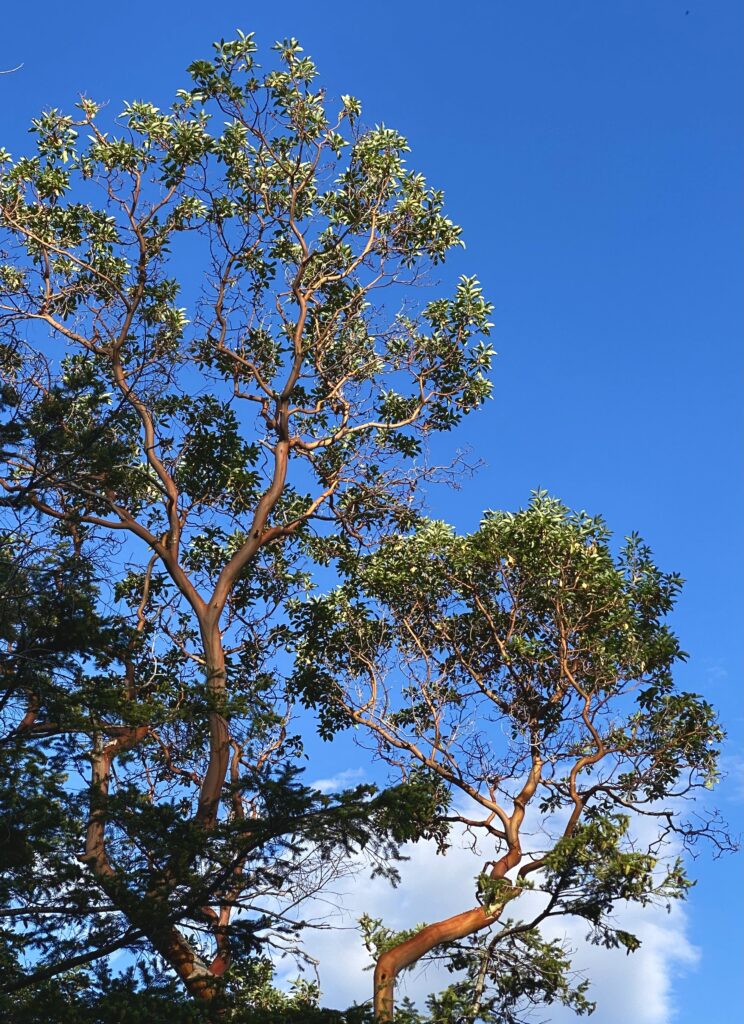
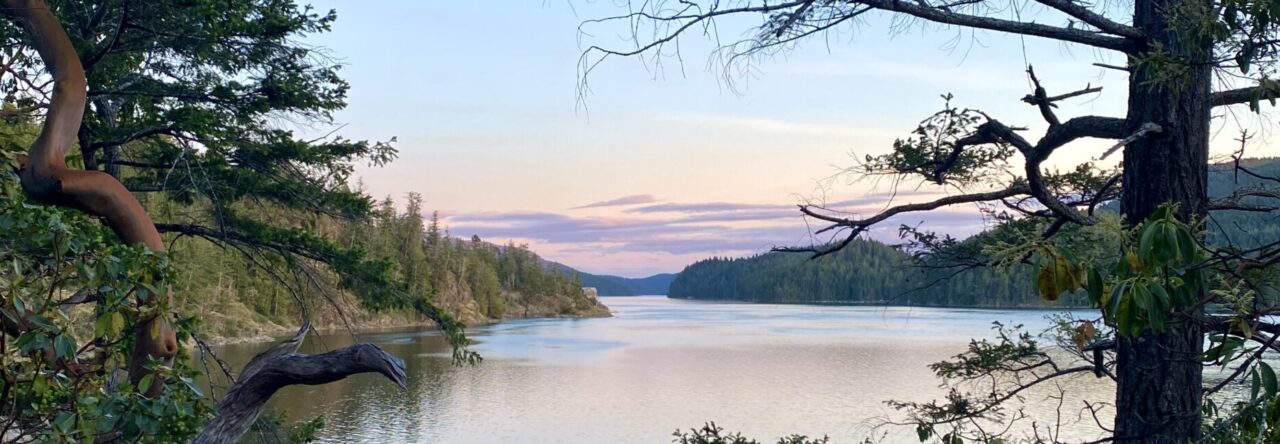
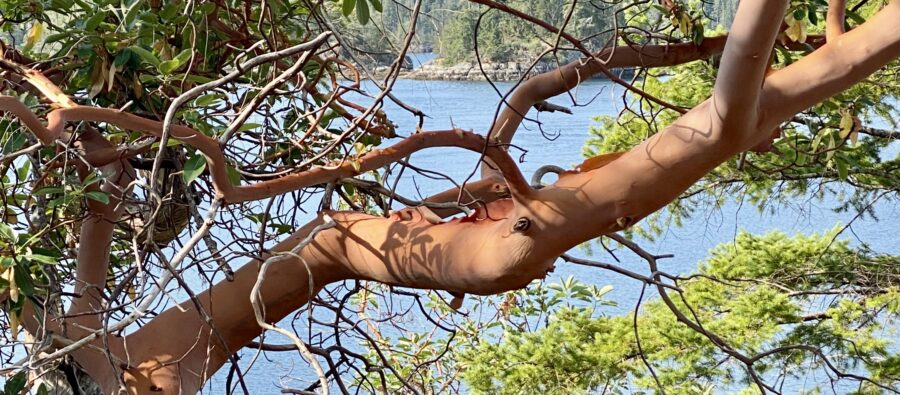
I don’t know what it is about them, but ever since the first day I visited Desolation Sound I was swept away by the arbutus trees here. Their beauty and quiet grace have cast a spell on me, and every year I learn a little bit more about them, both as individuals and as a species that are a distinctive part of the local ecology, along with associated flora like Douglas fir and hairy manzanita.
A Little Local Tree Lore
Commonly called arbutus in Canada, its scientific name, Arbutus menziesii, was given to it by botanist Frederick Traugot Pursh in 1814 after the Scottish naturalist, Archibald Menzies, who accompanied George Vancouver on his expedition in 1792. Arbutus goes by a multitude of other names as well like Pacific madrone, madrona, and madroño down south through its coastal range to Baja California.
In and around the Salish Sea, arbutus is traditionally considered sacred by local First Nations, and part of the local lore is of it helping to save the people on a mountain during a great flood in a tale similar to that of Noah. Arbutus also served many traditional uses and goes by several Indigenous names. Around Vancouver, the Sḵwx̱wú7mesh (Squamish) Nation, call arbutus lhulhuḵw’ay, pronounced (thlook-thlook-way). In hən̓q̓əmin̓əm̓ (Halkomelem), the traditional language of the səlilwətaɬ (Tsleil-Waututh) and neighboring Downriver Coast Salish nations, arbutus is called q̓a:nlhp, pronounced (q̓aan)-(lhp). Closer to Desolation Sound, the Coast Salish peoples of the Tla’amin, ƛoʔos (Klahoose), and Xwémalhkwu (Homalco) Nations also hold the arbutus as sacred, and in their shared local dialect, ʔayajuθəm (Ayajuthem), they call it kʷumkʷumay.
Curious Connections
With their bright red bark and sinuous boughs, arbutus not only are evocative of trees from more tropical climes, but have a quiet sylph-like anthropomorphic presence which makes them a popular subject by west coast artists from Emily Carr to one of my favourite local BC artists, Carol Evans, who painted the above Trees on the Point.
Over the last few years visiting the land, the more I looked at the arbutus lining the shore here and thought about how I might draw them myself, the more they reminded me of something I had seen before and it was pulling on the back of my mind every time I looked at them on a sunny day against the blue sky. Where had I seen images like this before? Why did they feel so familiar? And then, finally, I remembered what it was! They remind me of vintage travel posters for the south of France. As is clear in the examples below, the resemblance is uncanny!
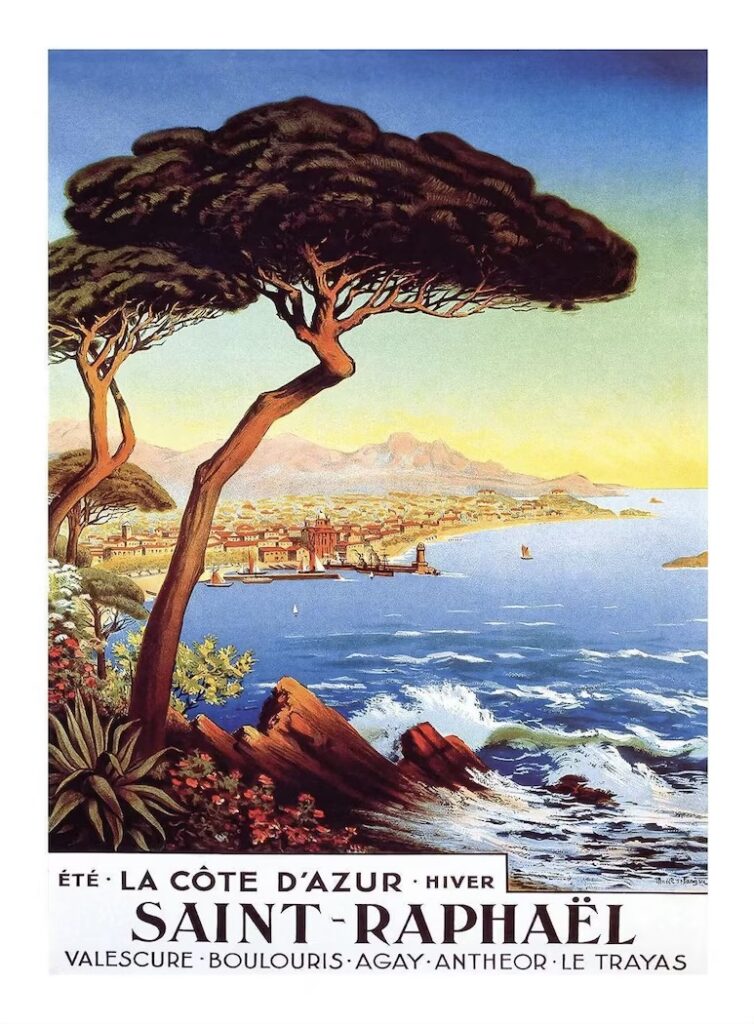
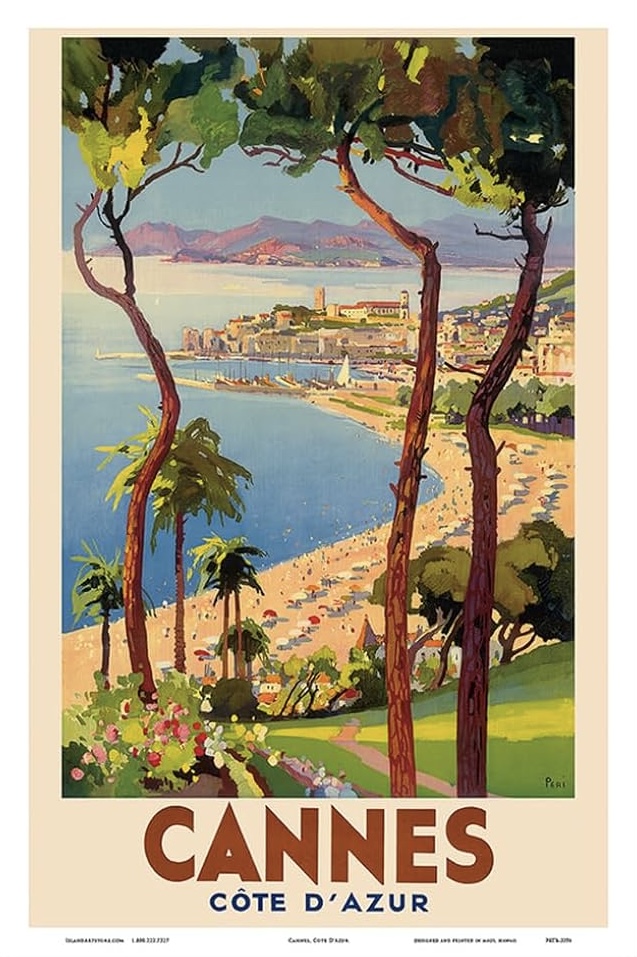
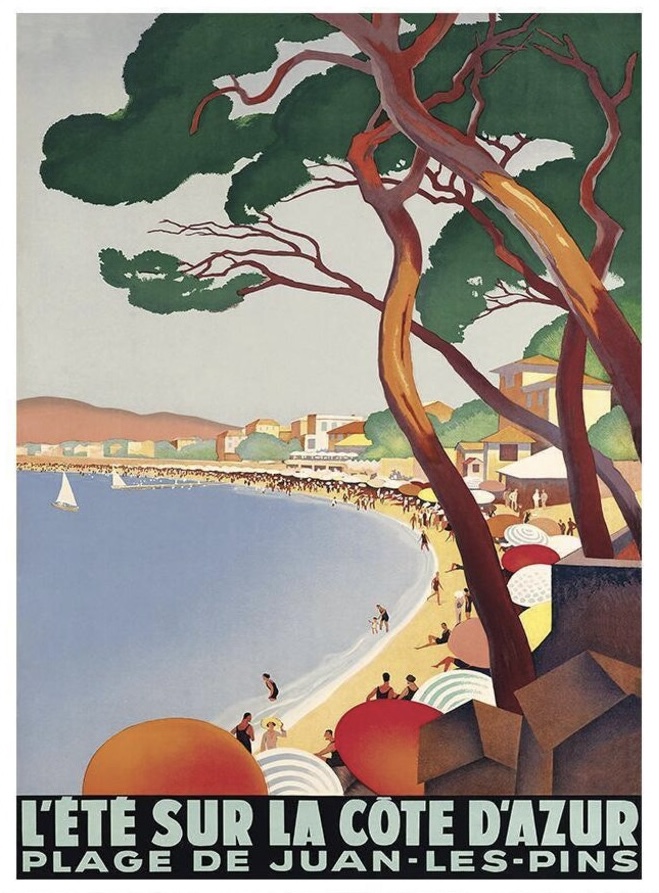
So, of course, after seeing this similarity, I HAD to know, was there actually a relation between the arbutus growing here along the Pacific coast of North America and the mysterious similar red trunked trees favoured by artists along the Côte d’Azur? And so I set about digging around and discovered that indeed there is! The North American arbutus along the Pacific coast has two European cousins, Arbutus andrachne and Arbutus canariensis, that grow not only in the south of France, but around the Mediterranean basin, along with various hybrids. And for the plant buffs out there, these two Mediterranean species are also related to the bushy strawberry tree, Arbutus unedo, that has been cultivated in and around the Lower Mainland, and produces edible red fruit that is plump and round compared to the also less palatable berries of other arbutus species.
So, does that mean that Desolation Sound is like a version of la Côte d’Azur in the raw? If you ask me, that’s a YES (but shhh don’t tell anyone.)
A Fascinating Past
So how did arbutus trees, as anomalous as they are to other tree species in North America, get here? The answer to this question is that the common ancestors of Pacific coast arbutus and its European cousins covered a vast connected range across the northern hemisphere in a continuous belt of warm broadleaf forest from about 66-23 million years ago. Any dinosaur buffs out there might raise an eyebrow on these dates, because the origin of these tree species spreading out was right after the asteroid that wiped out the dinosaurs! Then, around 23 million years ago the climate started to cool and dry and the land bridges connecting this expanse broke down, and the arbutus branch in what is now North America got separated from its previous homies. So, if arbutus seems like a subtropical tree it is because it is actually a survivor from an ancient lineage of actual subtropical trees that radiated across the earth after the age of the dinosaurs.
Anomalous Behaviour
There is a discrepancy here as well, however; because if arbutus is a tree with a subtropical vibe, why is it that when I look around the land right now at the cusp of summer, I see yellowing and falling leaves all around me abandoning their limbs to join the Southeasterly winds? Why is it feeling like autumn in springtime? What is happening???
As it turns out, arbutus, being the trickster tree that it is, messes with the duality of common definitions many of us learned growing up. Like, trees are either deciduous and lose their leaves, or they are evergreen, right? Well, no. At least not for arbutus. It is both! At the same time!! Now get your botany geek glasses out, because technically speaking, arbutus is classified as a broadleaf evergreen—the only broadleaf evergreen tree in Canada. This means that it retains its glossy green leaves all winter long. But it also has a deciduous phase where it drops its older leaves, and to make matters even more convoluted, instead of doing that in the fall like a normie tree, the arbutus typically sheds from June to August, while its new season leaves are growing in.
So unlike most deciduous trees we are familiar with that drop their leaves before the cold season, arbutus do most of their shedding during the early summer dry season. They also shed their old reddish-brown bark in mid summer, revealing their striking chartreuse new bark underneath, and that red papery bark also makes a relaxing tea…
What a thing it would be
to sip arbutus tea
while watching the tree
slowly slip out of the rest of its skin
by the Salish Sea.
So, right now all the arbutus around me are moving into their deciduous phase where they are starting to drop their old yellow leaves, but when you look up at the tips, you can see that indeed, they do also have bright green new foliage. Like Dylan Thomas writing above about himself as a wee lad in the poem, Fern Hill, arbutus are both green and gold… as they sing in their chains like the sea. And if that isn’t a form of sanctity in and of itself, I don’t know what is.