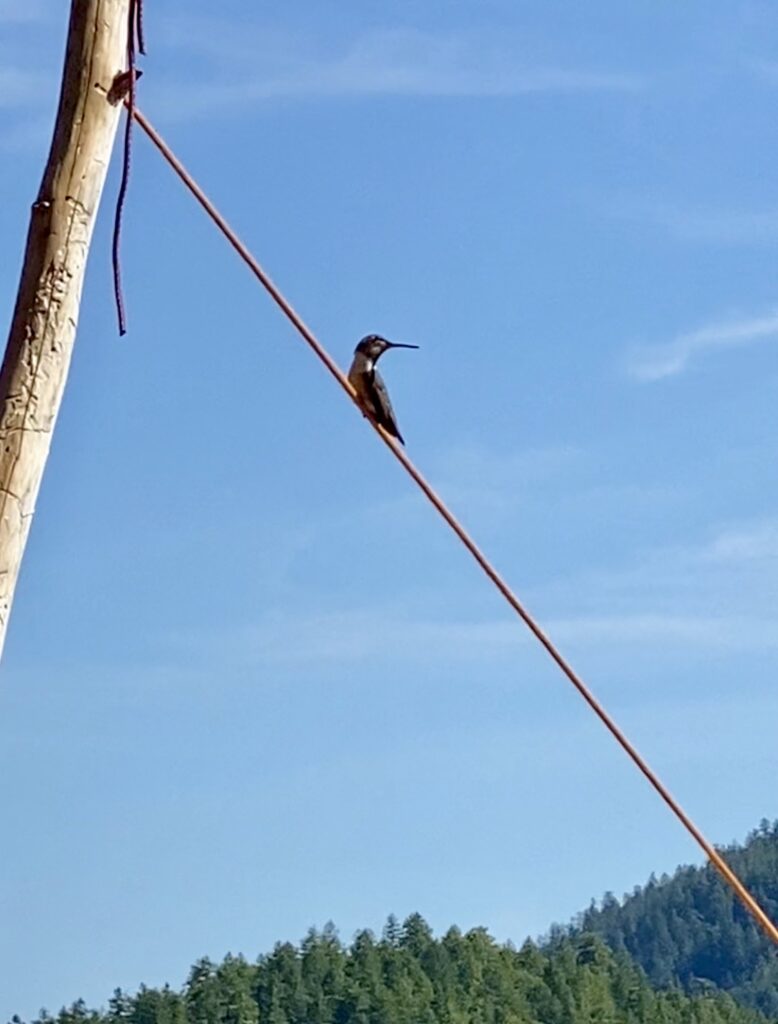
Serendipity goes by her own schedule. There are times in life where she graces you with her presence in regular glimmers, reminding you of the mystery and wonder that life can hold. I’ve also had periods where it feels like she has, if not deserted, at least taken an extended hiatus to a distant land where she’s considering setting up permanent shop.
Whether it’s because of the nature of the place, or because I’m paying more attention these days, serendipity does seem to like to make surprise appearances in Desolation Sound. Like, this day, when I was trying to test the line from this solar panel to the new Jackery power bank that my husband got. Solar power is our life line up here. While I’m using butane for my stove and gas for my boat (another long story as we started out with a 9.5’ tender with an e-motor and I had hoped to stay electric, but it wasn’t really feasible for me to do that…yet), for all our electronics and our power tools, the sun is our source of power. Which makes Desolation Sound a little bit like a solar punk lab, testing the limits of what regular folks can do to not just survive but thrive when detached from grid power. But solar punk isn’t just about using renewable power now and then. It has to go harder. It’s punk after all. So, I’ve been thinking about what solar punk might actually look like out here.
So, back to the Jackery power bank. As I was saying, it wasn’t charging for some reason, and I saw that there was a little console on the cord where you could plug in a USB, and so I plugged in my phone to it to test it. To my surprise and delight it started charging my phone directly! “Wow!”, I thought to myself, “That is so cool! It’s like I’m plugged right into the sun. Could that be classified as solar punk?” And then, as I was thinking this thought, serendipity came along and gave me my answer…
And as I was green and carefree, famous among the barns
About the happy yard and singing as the farm was home,
     In the sun that is young once only,
          Time let me play and be
     Golden in the mercy of his means,
And green and golden I was huntsman and herdsman, the calves
Sang to my horn, the foxes on the hills barked clear and cold,
          And the sabbath rang slowly
     In the pebbles of the holy streams.
Dylan Thomas (1914-1953), Fern Hill
I don’t know what it is about them, but ever since the first day I visited Desolation Sound I was swept away by the arbutus trees here. Their beauty and quiet grace have cast a spell on me, and every year I learn a little bit more about them, both as individuals and as a species that are a distinctive part of the local ecology, along with associated flora like Douglas fir and hairy manzanita.
A Little Local Tree Lore
Commonly called arbutus in Canada, its scientific name, Arbutus menziesii, was given to it by botanist Frederick Traugot Pursh in 1814 after the Scottish naturalist, Archibald Menzies, who accompanied George Vancouver on his expedition in 1792. Arbutus goes by a multitude of other names as well like Pacific madrone, madrona, and madroño down south through its coastal range to Baja California.
In and around the Salish Sea, arbutus is traditionally considered sacred by local First Nations, and part of the local lore is of it helping to save the people on a mountain during a great flood in a tale similar to that of Noah. Arbutus also served many traditional uses and goes by several Indigenous names. Around Vancouver, the Sḵwx̱wú7mesh (Squamish) Nation, call arbutus lhulhuḵw’ay, pronounced (thlook-thlook-way). In hən̓q̓əmin̓əm̓ (Halkomelem), the traditional language of the səlilwətaɬ (Tsleil-Waututh) and neighboring Downriver Coast Salish nations, arbutus is called q̓a:nlhp, pronounced (q̓aan)-(lhp). Closer to Desolation Sound, the Coast Salish peoples of the Tla’amin, ƛoʔos (Klahoose), andXwémalhkwu (Homalco)Nations also hold the arbutus as sacred, and in their shared local dialect, ʔayajuθəm (Ayajuthem), they call it kʷumkʷumay.
Curious Connections
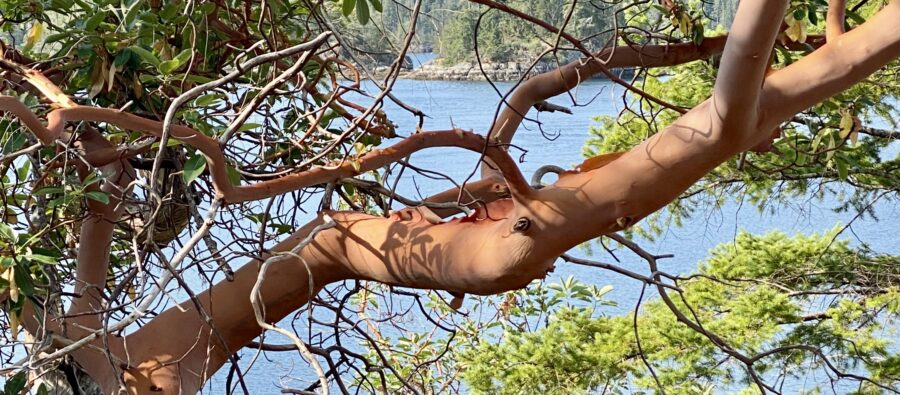
With their bright red bark and sinuous boughs, arbutus not only are evocative of trees from more tropical climes, but have a quiet sylph-like anthropomorphic presence which makes them a popular subject by west coast artists from Emily Carr to one of my favourite local BC artists, Carol Evans, who painted the above Trees on the Point.
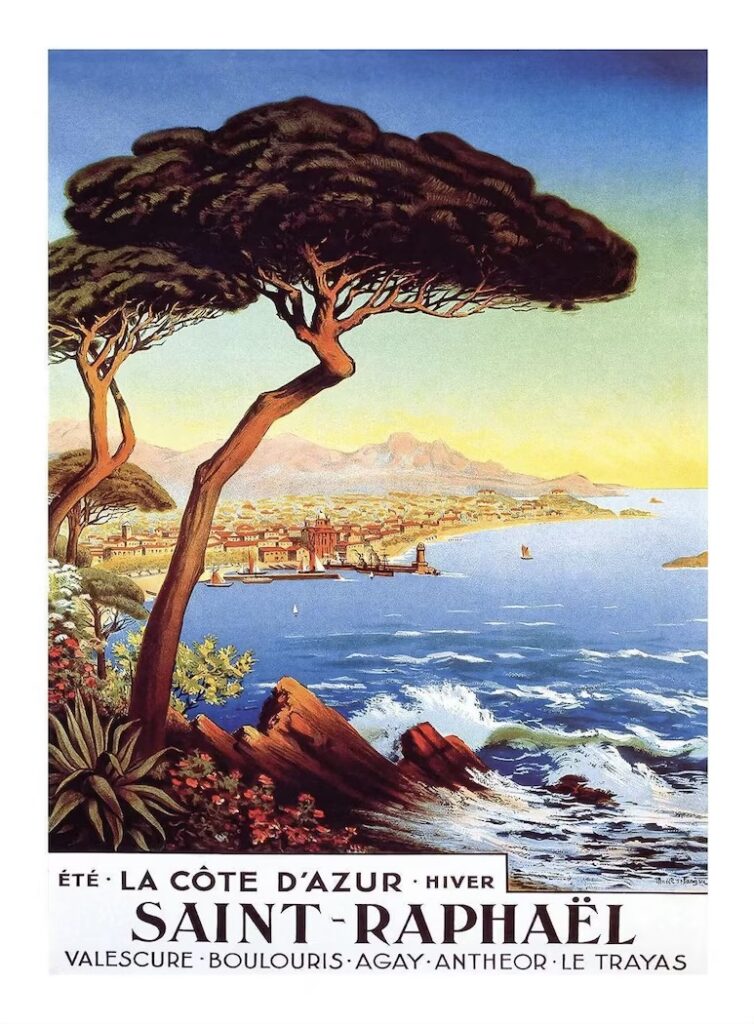
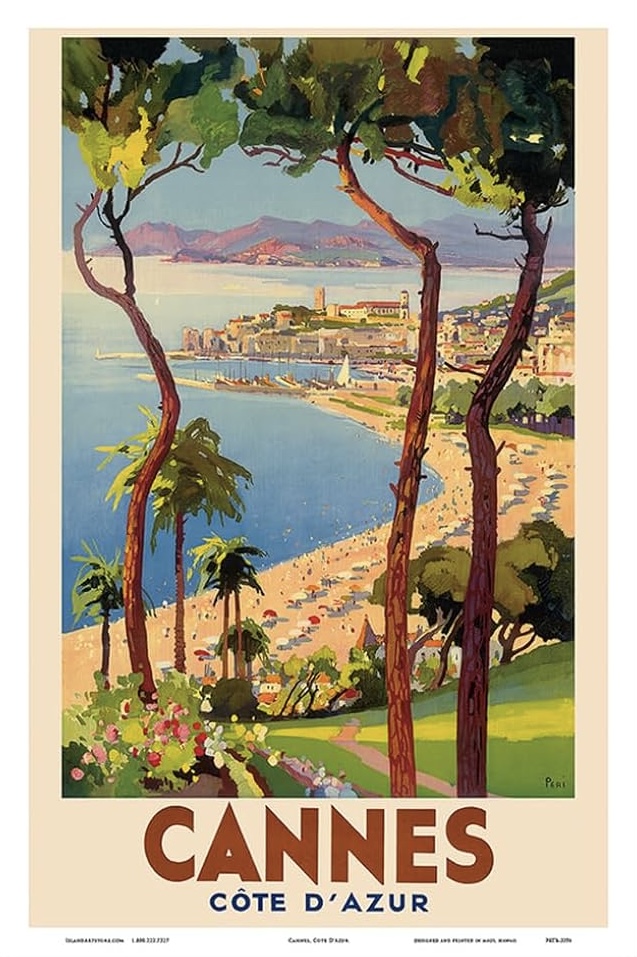
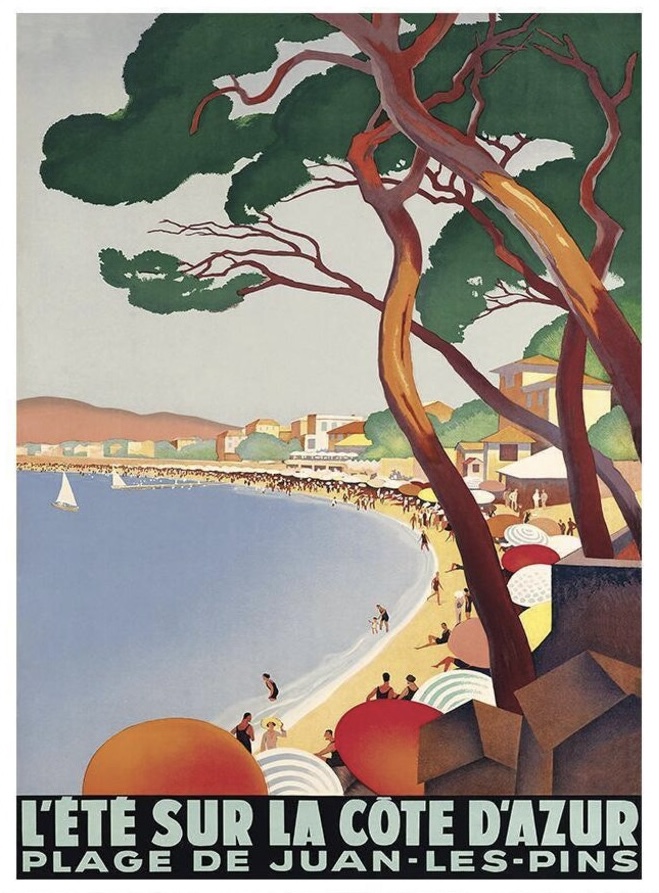
Over the last few years visiting the land, the more I looked at the arbutus lining the shore here and thought about how I might draw them myself, the more they reminded me of something I had seen before and it was pulling on the back of my mind every time I looked at them on a sunny day against the blue sky. Where had I seen images like this before? Why did they feel so familiar? And then, finally, I remembered what it was! They remind me of vintage travel posters for the south of France. As is clear in the examples below, the resemblance is uncanny!
So, of course, after seeing this similarity, I HAD to know, was there actually a relation between the arbutus growing here along the Pacific coast of North America and the mysterious similar red trunked trees favoured by artists along the Côte d’Azur? And so I set about digging around and discovered that indeed there is! The North American arbutus along the Pacific coast has two European cousins, Arbutus andrachne and Arbutus canariensis, that grow not only in the south of France, but around the Mediterranean basin, along with various hybrids. And for the plant buffs out there, these two Mediterranean species are also related to the bushy strawberry tree, Arbutus unedo, that has been cultivated in and around the Lower Mainland, and produces edible red fruit that is plump and round compared to the also less palatable berries of other arbutus species.
So, does that mean that Desolation Sound is like a version of la Côte d’Azur in the raw? If you ask me, that’s a YES (but shhh don’t tell anyone.)
A Fascinating Past
So how did arbutus trees, as anomalous as they are to other tree species in North America, get here? The answer to this question is that the common ancestors of Pacific coast arbutus and its European cousins covered a vast connected range across the northern hemisphere in a continuous belt of warm broadleaf forest from about 66-23 million years ago. Any dinosaur buffs out there might raise an eyebrow on these dates, because the origin of these tree species spreading out was right after the asteroid that wiped out the dinosaurs!
Then, around 23 million years ago the climate started to cool and dry and the land bridges connecting this expanse broke down, and the arbutus branch in what is now North America got separated from its previous homies. So, if arbutus seems like a subtropical tree it is because it is actually a survivor from an ancient lineage of actual subtropical trees that radiated across the earth after the age of the dinosaurs.
Anomalous Behaviour
There is a discrepancy here as well, however; because if arbutus is a tree with a subtropical vibe, why is it that when I look around the land right now at the cusp of summer, I see yellowing and falling leaves all around me abandoning their limbs to join the Southeasterly winds? Why is it feeling like autumn in springtime? What is happening???
As it turns out, arbutus, being the trickster tree that it is, messes with the duality of common definitions many of us learned growing up. Like, trees are either deciduous and lose their leaves, or they are evergreen, right? Well, no. At least not for arbutus. It is both! At the same time!! Now get your botany geek glasses out, because technically speaking, arbutus is classified as a broadleaf evergreen—the only broadleaf evergreen tree in Canada. This means that it retains its glossy green leaves all winter long. But it also has a deciduous phase where it drops its older leaves, and to make matters even more convoluted, instead of doing that in the fall like a normie tree, the arbutus typically sheds from June to August, while its new season leaves are growing in.
So unlike most deciduous trees we are familiar with that drop their leaves before the cold season, arbutus do most of their shedding during the early summer dry season. They also shed their old reddish-brown bark in mid summer, revealing their striking chartreuse new bark underneath, and that red papery bark also makes a relaxing tea…
What a thing it would be
to sip arbutus tea
while watching the tree
slowly slip out of the rest of its skin
by the Salish Sea.
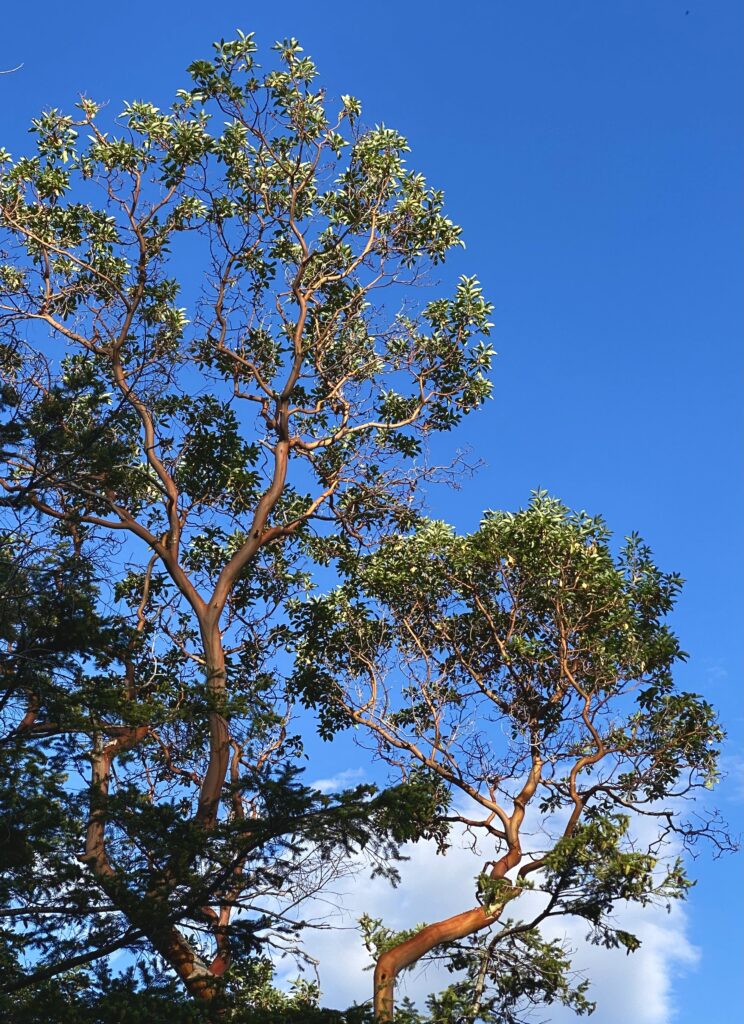
So, right now all the arbutus around me are moving into their deciduous phase where they are starting to drop their old yellow leaves, but when you look up at the tips, you can see that indeed, they do also have bright green new foliage. Like Dylan Thomas writing above about himself as a wee lad in the poem, Fern Hill, arbutus are both green and gold… as they sing in their chains like the sea. And if that isn’t a form of sanctity in and of itself, I don’t know what is.
If there is one thing that living off grid teaches you that we can be blissfully oblivious to living on grid, it’s about power. Not the Nietzschean will to power master of the universe type power, but actual power. Energy.
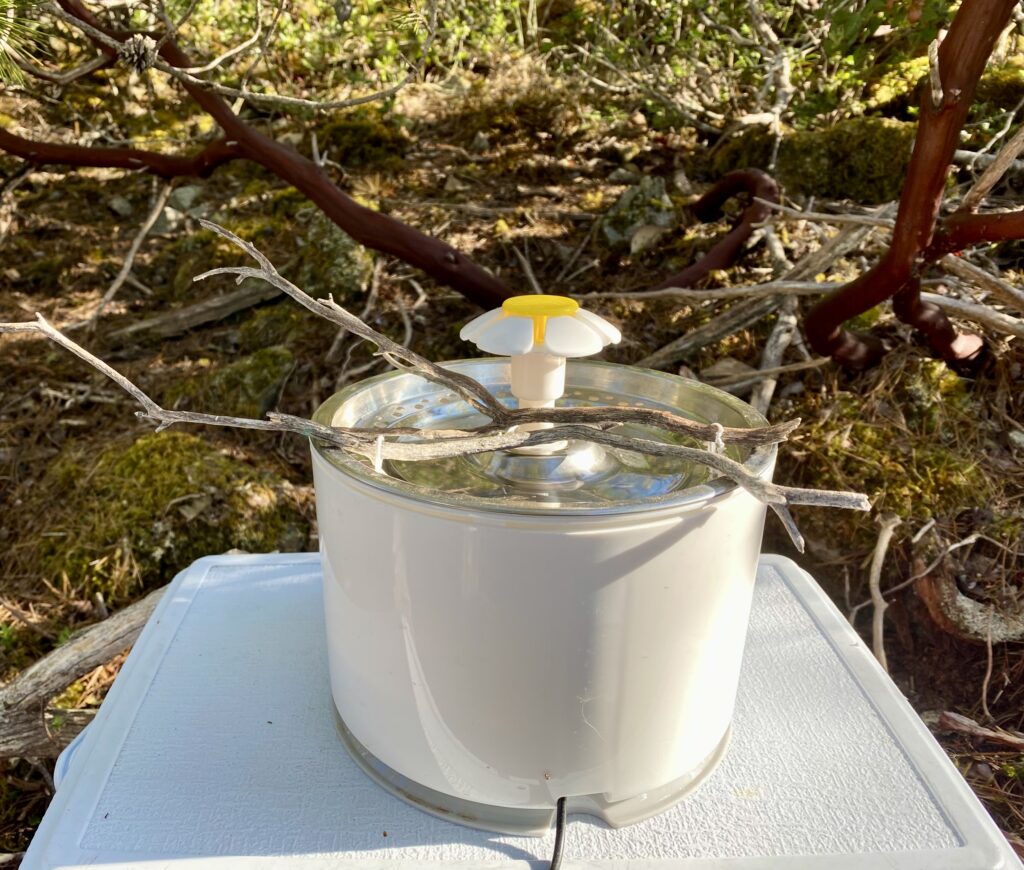
Like this rather ugly mistake of a plastic cat fountain above that I had a moment of weakness for and bought on sale, but my cats loathed and ignored and I have attempted to salvage by turning it into a hummingbird fountain to see if it might be of interest to them with the dry heat up here. I got my long suffering dh to cart this up when I met him at Scout camp back in May, and was all excited to plug this into our Jackery, which runs on solar power, and watch all the hummingbirds in the neighbourhood flock to the latest bougie bird spa in the sound. Welp, not only did the hummingbirds completely ignore it—they didn’t even sit on a branch! This innocuous looking beast actually completely drained my power bank running for a few hours!
Zero percent! So this isn’t like some of the gargantua solar setups like some of the neighbours have around here who have luxuries like four solid walls in their lives. No. It’s a Jackery Explorer 2000 V2 that can handle surge to 4400 W and ran our hammer drill just fine when we had to drill holes in the local granite bedrock. It also has been (up until now) a reliable power source for our Dometic cooler. But plug a ridiculous little water fountain into it, and you will drain its lifeblood in no time.
So it looks like the Desolacium Found Bird Spa is offline due to technical difficulties and the hummingbirds are going to have to wait some more for me to build their watery oasis of their dreams. I will look into some solar bird fountains and see what I can come up with next, but since it’s going to be raining for the next week, I think the birds will have so many options they wont need my services in the meantime. What do you think? Should the search to build the ultimate bougie biophilic hummingbird spa continue or should I drop this errant quest? Please let me know in the comments!
When I was a child I had a strange dream. I was standing out on a pier, similar to the one at Huntington Beach in California, and there were several tourists casually milling about. Someone over by the side gasped and yelled about something in the water, and everyone, including myself, went over to look. I climbed up and leaned over the railing and looked down. The sea was a this kind of deep turquoise, milky and luminous at the same time. Through it I could see the shapes of several large forms slowly gliding through the water.
It was so amazing. So many sea creatures! So many fish! Sharks! Whales!!! I wanted to get a better look so leaned out juuust a little bit more, and then before I knew it I lost my balance (or perhaps I felt a little push?) and was falling—-right down towards the water! Panic ensued as I tumbled through the air and down down down, sploosh! Into the sea. I plunged down deep, almost to the bottom, got my bearings and then looked around. The water was this amazing azure colour with sunlight streaming through and I could see the forms of the whales going by, feeling massive, like enormous dirigibles. My panic subsided as I realized nothing was coming to eat me, and I soon realized that I must be breathing underwater since I didn’t feel like I needed to go to the surface. I started to swim upwards and towards the whales as if pulled by a magnetic draw and as I got closer I felt like they were sending me this deep feeling of peace. I felt like I belonged there and they wanted to show me something, and so I started to swim with them to wherever they would take me. And then my mother woke up and I was terribly upset with her for ruining only the best dream of my life. But luckily for me, a week, or a month, or a year later (I don’t recall now) I did have the dream again. And then again. It was one of just a few that was recurrent.
And so it was that I felt like, after many a long year of not having this dream anymore, that at 11:11 am last Saturday, when I took this video standing on the land and looking out at the Inlet, I had to pinch myself to make sure I wasn’t dreaming of swimming out to sea with the whales once more.
How many orcas do you count? It seems to me at least three? And is that a baby orca I spot with the little fin? 🥹 It would be great to know which pod this is and which individuals.