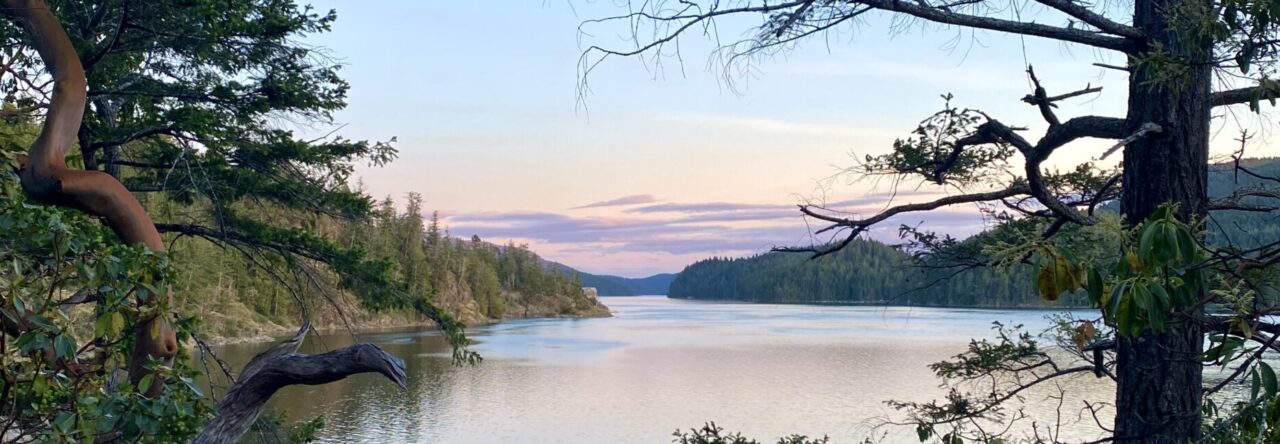
The following bibliography reflects the references used in the various posts on ëcopoë with a rough summary of how their content relates to the ecological and cultural relationships between humans, the land, and the more-than-human world.
This is a rough work in progress. I am posting it to share the process in case anyone is interested, so note that this table may completely change. I am also looking into options of sharing an EndNote bibliography rather than this approach. I’m also open to suggestions (through comment box below) at this point of what best practices are for sharing annotated bibliographic info. Thanks!
| Reference | Keywords | Abstract or Summary | Link |
| Adevi, A. A. and P. Grahn (2011). “Preferences for Landscapes: A Matter of Cultural Determinants or Innate Reflexes that Point to Our Evolutionary Background?” Landscape Research 37(1): 27-49. | Abstract Two different theories exist relating to preferences for landscapes: 1) people prefer certain types of landscape independent of their cultural and ethnic background, or preferences are innate; 2) people prefer landscapes experienced during childhood regardless of their appearance owing to learned conceptions, ore preferences are determined by culture. Our aim was to evaluate relationships among preferences for landscapes and childhood landscapes. Results are based on a questionnaire sent out at random to 2000 people in Sweden, and on a qualitative study comprising 19 people. They show that people: i) feel more at home in the type of landscape they grew up in and more often choose to settle down in this type of landscape, even if they have moved from their childhood region; ii) prefer qualities connected to childhood landscapes. However, some of these qualities, those suggested to be innate, are more preferred than others. In conclusion, people prefer landscapes experienced during childhood, but seem to attach more easily to qualities that are suggested to have an innate significance | ||
| Bassho, Keith. 1996. Wisdom Sits in Places. University of New Mexico Press. p. 66. | anthropology, ethnography, indigenous, Apache, landscape, semiotics | Anthropological and ethnographic study demonstrating the causal connections between landscape/space, history, social narrative, cultural symbolic meaning and place names among the Cibercue, Arizona Western Apaches. Illustrates exactly how the land comes to hold deep symbolic meaning for indigenous peoples. | Amazon |
| Greenbie, Barrie. 1981. Spaces: Dimensions of the Human Landscape. Yale University Press. | landscape architecture, urban planning, | Examines interactions between humans and nature. | Amazon |
| Hanh, Thich Nhat. 2001. Finding Our True Home. Parallax Press, Berkley California. | Buddhism | Amazon |
|
| Snyder, Gary. 1990. The Etiquette of Freedom. The Practice of the Wild. New York. North Point Press. | Amazon |
||
If you have suggestions on formats to share bibliograpahies that may be more clear than the type of table above (like links to good examples or tips and tricks), please feel free to shoot me a suggestion below, thanks!
[contact-form][contact-field label=’Name’ type=’name’ required=’1’/][contact-field label=’Email’ type=’email’ required=’1’/][contact-field label=’Website’ type=’url’/][contact-field label=’Suggestion on Table?’ type=’textarea’ required=’1’/][/contact-form]